




Australia is the First Country to Ban Engineered Stone
In December 2023, Australia became the first country to announce a national ban on the manufacture, supply, processing, installation and importation of engineered stone. This was a response to rising cases of workers developing a deadly lung disease called Silicosis.
The ban was unanimously approved by Work Health and Safety ministers and took effect on 1 July 2024. It applies to all Australian territories, with some details and exceptions varying in different states.
Read on to learn what the engineered stone ban means for homeowners, builders, and the stone benchtop industry.
What Is Engineered Stone
Engineered stone, sometimes called reconstituted or fake stone, is a man-made surface made from about 90% crushed quartz mixed with resin and pigments.
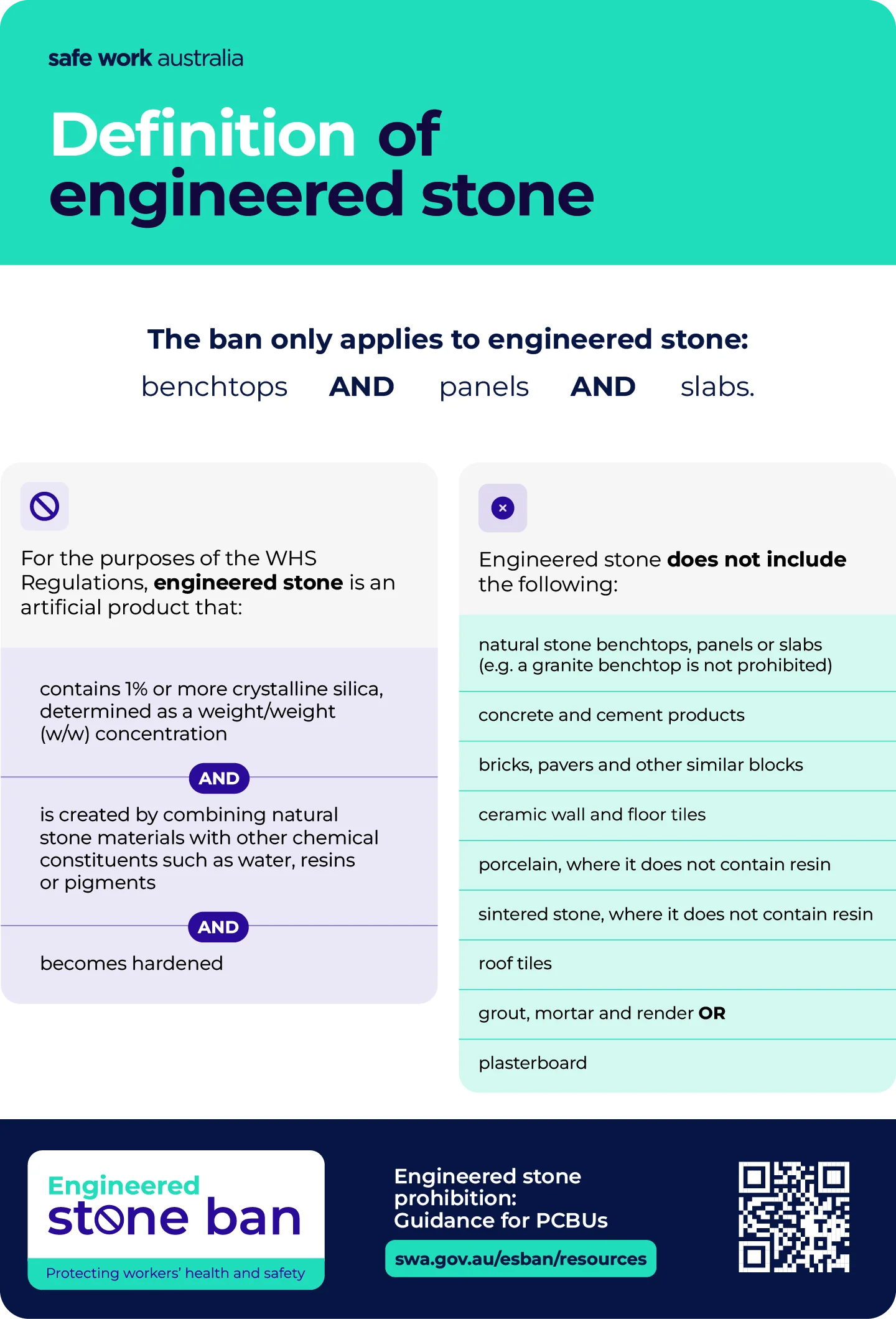
According to Safe Work Australia, products are considered engineered stone if it:
- contains at least 1% crystalline silica by weight
- is made by combining natural stone with chemicals like resins or pigments
- hardens into a solid material
Why Is Engineered Stone Banned in Australia
When cut, shaped, or polished, engineered stone releases crystalline silica dust. When inhaled, silica dust can cause severe respiratory diseases such as silicosis and lung cancer. A 2022 study showed that more than one in five Australian stonemasons (22.4%) had been diagnosed with silicosis from silica exposure.
The ban aims to protect workers, their families, and the community from the health risks associated with handling engineered stone. For more information about the engineered stone ban, visit this page.
What Is Banned
Under the model WHS Regulations, the manufacture, supply, processing, and installation of the following engineered stone products are banned:
- Benchtops
- Panels
- Slabs
It’s now an offence for a Person Conducting a Business or Undertaking (PCBU) to manufacture, supply, process, or install engineered stone benchtops, slabs, or panels.
The import of fake stone benchtops and slabs has also been banned in Australia since 1 January 2025.
What Isn’t Banned
Not everything is affected by the ban. This includes:
- Porcelain and Sintered Stone products
- Products that contain less than 1% crystalline silica
- The controlled removal and repair of previously installed engineered stone products
- Finished engineered stone products that do not require processing such as jewellery and garden ornaments.
Is Caesarstone Banned in Australia?
No, Caesarstone is not banned as a brand. However, their Engineered Stone Range has been banned in Australia since July 2024 due to its high silica content. The company has introduced new silica-free options, including their Porcelain and Mineral collections, which are safer and more durable.
At United Stone Melbourne, we install Caesarstone benchtops from these silica-free ranges, ensuring safer and longer lasting solutions.
What If You Already Have Engineered Stone Installed?
Legacy engineered stone, which are engineered stone products that have already been installed, do not need to be removed. Safe Work Australia has confirmed legacy engineered stone is safe as long as it remains undisturbed.
Any removal, repair, or modification must be carried out by licensed professionals using dust suppression, protective gear, and approved safety systems. In most states, the WHS regulator must be notified before work begins. In Victoria, notification is not required, but controlled processing still applies.
Safer Alternatives to Engineered Stone Benchtops
There are safer and equally stylish stone benchtop alternatives to engineered stone in Australia that aren’t banned. Materials like porcelain and natural stone have little to no silica, making them safer and more durable.
The following materials are great alternatives to consider for stone benchtops:
- Porcelain Benchtops (Sintered Stone)
- Natural Stone Benchtops, such as Marble, Granite, Quartzite, Dolomite or Limestone
- Terrazzo Benchtops (low silica only – usually cement based)
Other non-stone alternatives used for benchtops include:
- Laminate
- Timber
- Concrete
- Tiles
- Stainless steel
- Glass
Moving Forward Without Engineered Stone
The national ban on engineered stone marks a major change for the building and renovation industry, but it puts health and safety first. With modern materials like porcelain, homeowners can still enjoy beautiful, durable surfaces without the risks of silica dust.
At United Stone Melbourne, we switched from engineered stone to safer materials six years ago, well before the ban. Porcelain has been our main choice since the switch because it’s durable, low-maintenance, and resistant to heat, stains, and scratches.
We also offer natural stone options such as granite and marble, which are popular replacements for engineered stone. Both are timeless options that combine strength, style, and safety. At United Stone Melbourne, we’re proud to be part of this safer path forward and help Australians build healthier, longer-lasting homes.
Contact us if you’d like to find out more or get a quote.